What is Neurodiversity ?
Did you know the words neurodiversity and neurodivergence are not the same as referring to a person with an Autism diagnosis? A person identifying as neurodivergent may or may not have a disability at all, and may or may not have autism. But, a person who describes themselves as neurodivergent could find that their brains work or learn differently than their peers, and it may cause them challenges in their day-to-day life experiences. They may not need an educational access accommodation to participate in campus life, but they could benefit from patience, understanding, awareness, and connections to resources. When in doubt, ask a person how they best learn or communicate, or ask what you can do differently to support or engage with them when they use this terminology in introducing themselves to you. What it means to them may not be what it means to you, never assume.
Neurodiversity describes the idea that people experience and interact with the world around them in many different ways; there is no one “right” way of thinking, learning, and behaving, and differences are not viewed as deficits. The word neurodiversity refers to the diversity of all people, but it is often used in the context of autism spectrum disorder (ASD), as well as other neurological or developmental conditions such as ADHD or learning disabilities. The neurodiversity movement emerged during the 1990s, aiming to increase acceptance and inclusion of all people while embracing neurological differences. Through online platforms, more and more autistic people were able to connect and form a self-advocacy movement.
Words Matter in Neurodiversity
Neurodiversity advocates encourage inclusive, nonjudgmental language. While many disability advocacy organizations prefer person-first language (“a person with autism,” “a person with Down syndrome”), some research has found that the majority of the autistic community prefers identity-first language (“an autistic person”). Therefore, rather than making assumptions, it is best to ask directly about a person’s preferred language, and how they want to be addressed. Knowledge about neurodiversity and respectful language is also important for clinicians, so they can address the mental and physical health of people with neurodevelopmental differences.
Building an Inclusive Campus: Understanding Neurodiversity at UMBC
At UMBC, we strive to create an inclusive and supportive environment for all members of our community. As part of this commitment, we’re introducing key terms related to neurodivergence to help foster awareness, understanding, and respect for the diverse ways people think, learn, and experience the world. Many students, faculty, and staff identify as neurodivergent, encompassing conditions such as ADHD, autism, dyslexia, and more. By familiarizing ourselves with these terms, we can build a more informed and inclusive campus where everyone feels valued and supported. Understanding neurodivergence is an important step toward reducing stigma, improving communication, and ensuring that UMBC remains a welcoming space for all minds. Here are a few terms to know:
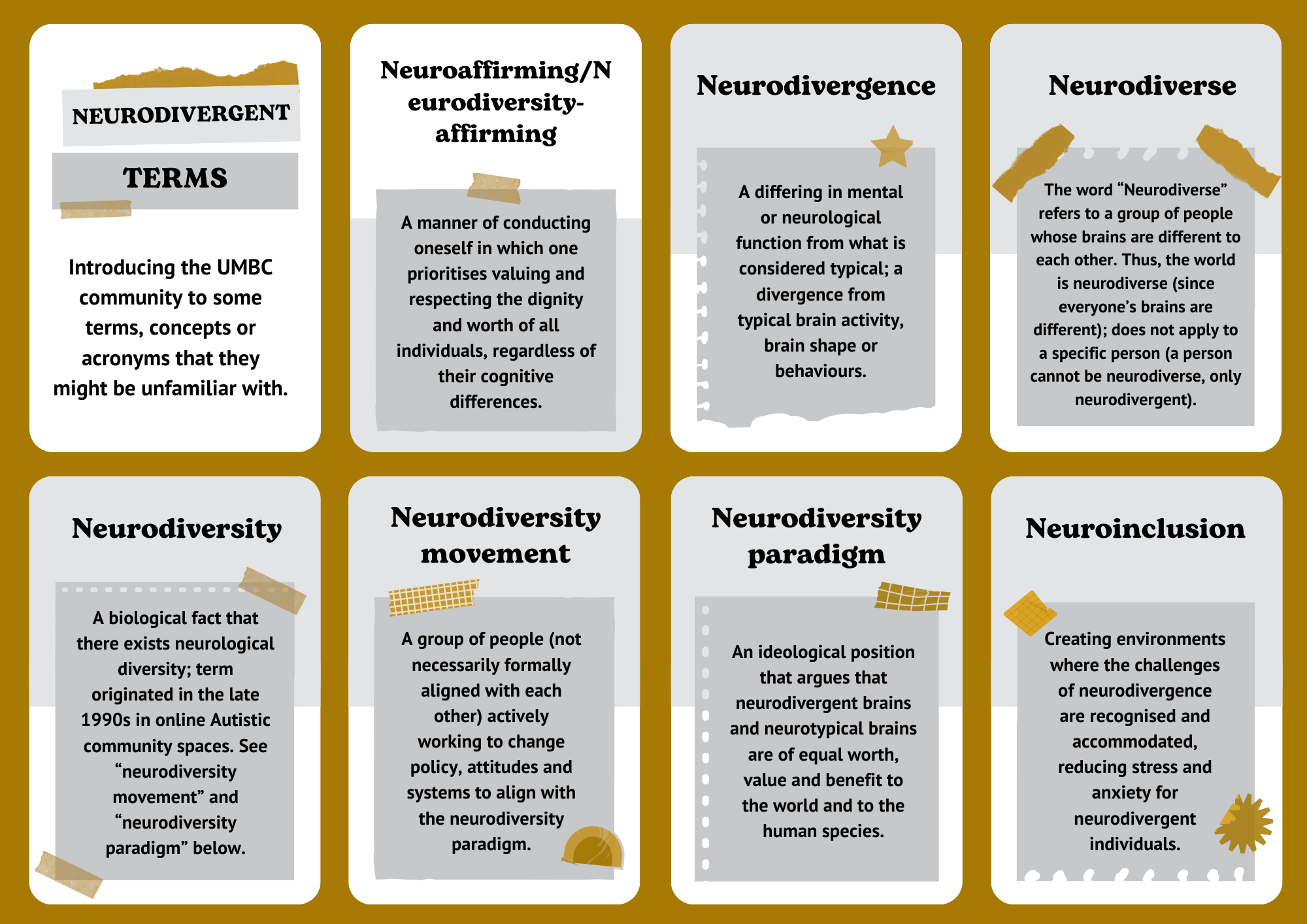
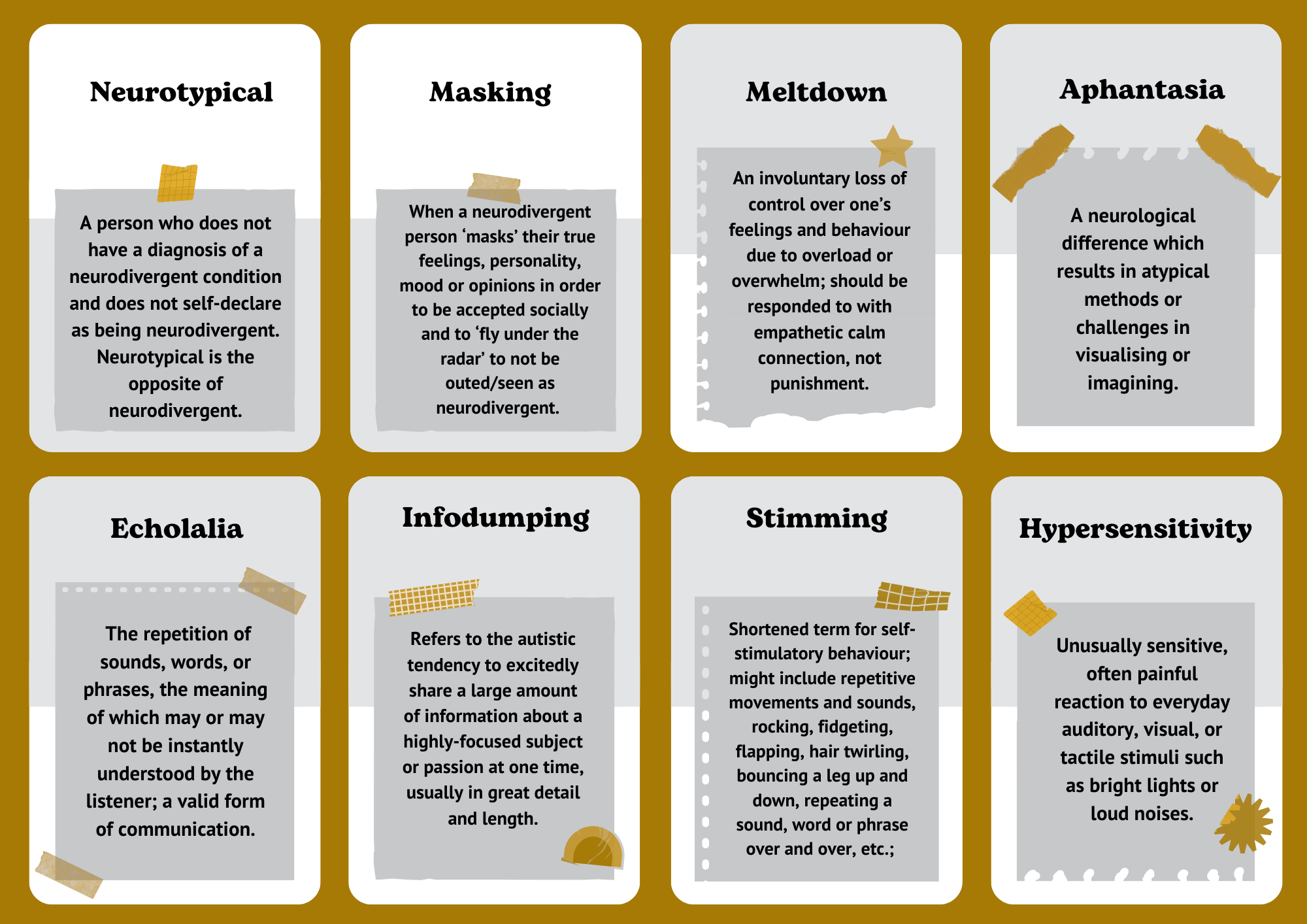
Neurodivergent Terms Text Alternative
Definitions of Neurodivergent Terms:
Introducing the UMBC community to some terms, concepts or acronyms that they might be unfamiliar with.
- Neuroaffirming/Neurodiversity-affirming: A manner of conducting oneself in which one prioritises valuing and respecting the dignity and worth of all individuals, regardless of their cognitive differences.
- Neurodivergence: A differing in mental or neurological function from what is considered typical; a divergence from typical brain activity, brain shape, or behaviors.
- Neurodiverse: The word “Neurodiverse” refers to a group of people whose brains are different to each other. Thus, the world is neurodiverse (since everyone’s brains are different); does not apply to a specific person (a person cannot be neurodiverse, only neurodivergent).
- Neurodiversity: A biological fact that there exists neurological diversity; term originated in the late 1990s in online Autistic community spaces. See “neurodiversity movement” and “neurodiversity paradigm” below.
- Neurodiversity movement: A group of people (not necessarily formally aligned with each other) actively working to change policy, attitudes, and systems to align with the neurodiversity paradigm.
- Neurodiversity paradigm: An ideological position that argues that neurodivergent brains and neurotypical brains are of equal worth, value, and benefit to the world and the human species.
- Neuroinclusion: Creating environments where the challenges of neurodivergence are recognised and accommodated, reducing stress and anxiety for neurodivergent individuals
- Neurotypical: A person who does not have a diagnosis of a neurodivergent condition and does not self-declare as being neurodivergent. Neurotypical is the opposite of neurodivergent.
- Masking: When a neurodivergent person ‘masks’ their true feelings, personality, mood, or opinions in order to be accepted socially and to ‘fly under the radar’ to not be outed/seen as neurodivergent.
- Meltdown: An involuntary loss of control over one’s feelings and behaviour due to overload or overwhelm; should be responded to with empathetic calm connection, not punishment.
- Aphantasia: A neurological difference which results in atypical methods or challenges in visualising or imagining.
- Echolalia: The repetition of sounds, words, or phrases, the meaning of which may or may not be instantly understood by the listener; a valid form of communication.
- Infodumping: Refers to the autistic tendency to excitedly share a large amount of information about a highly-focused subject or passion at one time, usually in great detail and length.
- Stimming: Shortened term for self-stimulatory behaviour; might include repetitive movements and sounds, rocking, fidgeting, flapping, hair twirling, bouncing a leg up and down, repeating a sound, word, or phrase over and over, etc.;
- Hypersensitivity: Unusually sensitive, often painful reaction to everyday auditory, visual, or tactile stimuli such as bright lights or loud noises.
For more details and terminology, please refer to the cited resources below: